
Meet Your Killers
Chapter 2: Water

Water
Pesticides
Water is the most vital and essential natural resource there is. A large part of our body—of virtually every living body—is made up of water. Seventy percent of our planet is covered by water, but only 3 percent is freshwater and only a small fraction of 1 percent of that supports all life on land. You would think that preserving the purity and potability of freshwater should be a political priority. As you read in the “Food” chapter, our water resources from groundwater to lakes and rivers are polluted by the heavy use of pesticides.
Fifty percent of the population in the United States depends on groundwater for their water needs. Contrary to what was once thought, pesticides end up in the groundwater. They can remain there for decades, depending on the permeability of the ground and the depth of the water table. This means we find pesticides in the groundwater that were forbidden years ago. There are maximum safe limit standards set up by the EPA for some pesticides in the water supply, but not for all of them. There are no studies showing if a mixture of “safe limit” pesticides is still safe. One billion pounds of pesticide-active ingredients are used in the United States per year, and more than 16,000 pesticide products are marketed in the country.
The US Geological Survey did extensive testing of our water supply for pesticides. They found at least one pesticide in all the streams tested. Organochlorine compounds (e.g., DDT—a banned pesticide) were found in most fish and bed sediment samples of rivers. In shallow groundwater, 50 percent of all samples were contaminated by pesticides. In deeper aquifers, about one-third of all samples were contaminated with at least one pesticide.
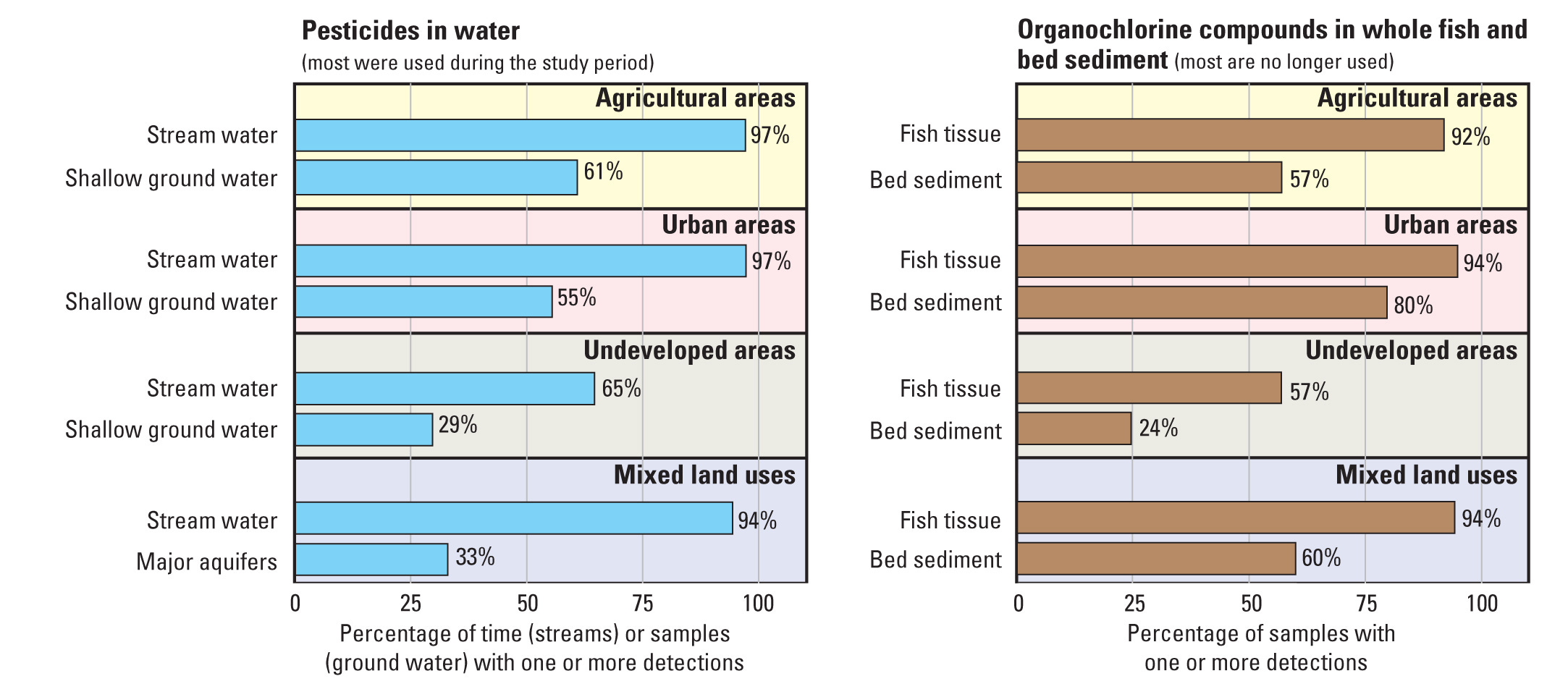
Tables from USGS.gov
These tables show the rate of contamination of rivers and groundwater by pesticides and the contamination of fish and bed sediment by organochlorine compounds.
The EPA determines safe levels for aquatic life. Of the 178 streams sampled nationwide, 56 percent of them contained pesticides that were harmful to at least one aquatic life-form. Eighty-three percent of urban streams contained levels dangerous to at least one aquatic life-form. These concern mostly the pesticides diazinon, chlorpyrifos, and malathion. Organochlorine compounds were found in 70 percent of urban streams at a concentration dangerous to at least one aquatic life- form. The EPA claims that the pesticide levels are safe for humans, except in the 9.5 percent of streams where levels exceeded safe levels.
The following list shows the effects of pesticides observed in wild life. The effects depend on the pesticide and the organism investigated:
Death of the organism
Cancers, tumors, and lesions on fish and animals.
Reproductive inhibition or failure.
Suppression of immune system.
Disruption of endocrine (hormonal) system.
Cellular and DNA damage.
Teratogenic effects (physical deformities such as hooked beaks on birds).
Poor fish health marked by low red-to-white-blood-cell ratio, excessive slime on fish scales and gills, etc.
Intergenerational effects (effects are not apparent until subsequent generations of the organism).
Other physiological effects such as egg-shell thinning.
Ninety percent of the time, water samples contained at least two pesticides, and 20 percent of the time, they contained ten or more different pesticides. There are no studies showing the safety of combined pesticides and their degraded forms. Pesticides often change into another chemical, so-called degrades. Nobody knows what the synergistic effects are of a pesticide mixture and a mixture of degrades and pesticides.
Many of the pesticides are hormone disruptors. They change the male hormone testosterone into the female hormone estrogen. Tyrone Hayes, a researcher at the University of California, Berkley, found male leopard frogs in the US heartland growing ovaries and laying eggs, essentially becoming hermaphrodites—male/female hybrids. Professor Shanna Swan at the University of Missouri, Columbia, found that men in Missouri have far lower sperm counts than men in New York, Los Angeles, and Minneapolis. She attributes this to the use of pesticides. Since none of the men tested were farm workers, she suspected the culprit was tap water.
An environmental working group studied cord blood from newborns and found 200 different chemicals including traces of twenty-one pesticides, among them DDT, which has been banned for many years. Infants are most vulnerable to pesticide poison. A link with the rise in autism and ADHD is suspected. As they get older, children are exposed to insecticides in school. According to a study published in the Journal of the American Medical Association, students and teachers are becoming acutely ill from pesticide exposure. Over 2,600 cases of illness were identified between 1998 and 2002. Pesticides are not just used in agriculture but also in office buildings, airplanes, school grounds, private yards, and parks.
Exposure to pesticides of a developing fetus, infant, or child can cause neurotoxic effects such as learning disabilities and diminished intelligence. Just look at the increase of attention deficit disorders and autism in the past decade. Autism in boys increased by 261 percent and in girls by 385 percent between 1997 and 2008. As you read earlier, many pesticides work by increasing the neurotransmitter acetylcholine. Having too much of this causes constant firing of neurons or overexcitement. Sounds like ADHD to me.
Childhood cancers are increasing as well, particularly brain cancer and leukemia that increased by 50 percent and 40 percent respectively since 1975. The incidence of childhood cancers is greater in agricultural areas.
Asthma is the most diagnosed chronic disease in children today. A California study showed that pesticide exposure during the first year of life increased the risk for developing asthma.
Obese children have higher concentrations of p-dichlorobenzene in their urine. The body uses fat tissue to store unwanted chemicals it can’t metabolize. This makes fat loss so hard for children whose fat tissue is full of such chemicals.
Researchers in Sweden (Torstensson, 1990) found that there is less nitrogen production in soil treated with pesticides and consequently less nitrogen uptake by plants. Pesticides also affect the microorganisms in soil that are responsible for plant degradation and soil structure. This in turn forces the use of fertilizers to grow crops.
Pesticides are not the only problem in our water supply, though.
Heavy Metals
Heavy metals are found in water, food, cosmetics, and in the air. The topic of heavy metals could belong in any of these chapters, but we will look at them in the “Water” chapter as it is easy to filter them out with a good water filter.
Heavy metals include lead, arsenic, aluminum, cadmium, mercury, uranium, and some others found less frequently. There are a total of fifty elements classified as heavy metals of which seventeen are considered extremely toxic and readily available.
Some pesticides contain lead arsenate that contaminates the soil and consequently the groundwater. Elevated levels of lead and arsenic were found in orchard soils in a study by Yokel J. Delistraty of the Washington State Department of Ecology.
Most heavy metals, though, come from industrial and urban runoff. Heavy metals end up in the environment by air emission from coal-burning plants, smelters, and other industrial facilities. Waste incinerators, landfills in the ground, and processes from waste mining also contribute to heavy metals in the air, in the ground, and in water. Old plumbing pipes contain lead as do old house paints. Some heavy metals like arsenic occur naturally and are dissolved in the groundwater. Heavy metals remain in the environment for decades, even centuries.
Heavy metals occur in our drinking water and in our food, as well as in the air. Let’s look at each important heavy metal and find out where it comes from and what it does to us.
Aluminum
Sources: Aluminum is used as a flocculating agent in water treatment plants. Some plants also add it as aluminum fluoride to the drinking water. We will look at fluoride later. Antacids contain aluminum as do standard underarm deodorants and sunscreens. Some well-known products are Mylanta, Maalox, and Ryopan. Many baking powders contain aluminum in a well-absorbable form. Processed cheese products are high in aluminum due to the manufacturing process. These include American cheese, Velveeta, and similar products. Acidic foods cooked in uncoated aluminum pans absorb a lot of aluminum. Styptic pencils applied to cuts contain aluminum. Table salt contains aluminum. Table salt is the worst salt you can use as it is devoid of any trace minerals. Use sea salt instead. Herbs such as peppermint, spearmint, and wintergreen are naturally high in aluminum. Many vaccines contain aluminum as well.
Problems: Aluminum is suspected to play a role in Alzheimer’s disease. By blocking an enzyme, ammonia increases in the blood, causing impaired brain function with poor memory and confusion. It can also cause anemia and problems with the heart muscle. It is also believed to trigger sarcoidosis, an autoimmune disease.
Children and adults with impaired kidney functions are much more susceptible to aluminum poisoning. Children absorb aluminum much easier than adults, and they are more sensitive to its toxic effects. Adults with kidney problems have a problem excreting aluminum, so it accumulates at a higher rate than in healthy adults.
There is a common link between Alzheimer’s and autism. The brains of Alzheimer patients have higher concentrations of aluminum compared to healthy people. Children in countries with high rates of autism have the highest exposure to vaccines containing aluminum. These vaccines expose children to more aluminum at eighteen months than the rest of their lives. It’s no surprise that higher levels of aluminum are found in autistic children. Older people, on the other hand, have a lifetime accumulation of aluminum.
Aluminum in the brain causes oxidative damage as it acts as a free radical. This is especially true when iron is also present. Aluminum competes with, and substitutes for, magnesium and calcium ions, and it interferes with calcium metabolism.
Antimony
Sources: Antimony is heavily used in flame retardants in plastics and textiles. Children’s bedding and pajamas must be treated with it, but by law, they are not labeled as treated. Most curtains, upholstery, and carpets have also been treated. Water pipes that used to contain lead now contain antimony. It is also used in pottery glazes instead of lead, and it is used in paints instead of lead. It catalyzes the synthesis of polyesters and polyethylene resins of which many are used for food containers. It is also used in fluorescent light bulbs, and it’s added to lubricants like motor oil.
Problems: Antimony is especially retained in the body if mercury is present. Accumulation of antimony happens in the liver, causing fatty liver and possibly jaundice. Antimony suppresses white blood cells and the immune system. It can cause anemia, but the most significant long-term problem is its cardiotoxic effect. Antimony also concentrates in the heart and predisposes to heart attack and diseases of the heart muscle, producing arrhythmias, heart failure, and even cardiac arrest. These problems are compounded when mercury is present as well.
Antimony interferes with magnesium utilization on the cellular level, which can lead to vertigo, confusion, balance problems, muscle tension, nervous ticks, charley horse, weakness, clumsiness, reduced sweating, irregular heartbeat, and bouts of anger.
In men, antimony can reduce testosterone, leaving them unmotivated, fatigued, achy, and sexually disinterested. In the long term, low testosterone promotes heart disease, diabetes, loss of muscle mass, obesity, and prostate problems.
Antimony can slow down digestion, producing gas, bloating, and colic spasms. It can also have psychological effects. Children retreat from being touched or looked at. Adults get depressed, anxious, and feel quickly insulted.
Arsenic
Sources: Older woods like fence posts, wooden decks, and raised garden beds were treated with arsenic. It gives the wood a green tinge. If such wood is used in garden beds, there will be arsenic in the food grown in there. Children playing on wooden decks treated with arsenic will also be exposed. Newer wood is now mostly treated with copper, which also gives the wood a green hue, so it’s impossible to know whether the wood was treated with arsenic or copper. When handling such wood, it’s best to wear gloves. The arsenic in such wood is water soluble and comes out easily, which is why it will drench the soil in any garden beds.
Some pesticides contain lead arsenate. Usually, large fields are drenched with it, and the crops absorb it. Finally, it ends up in the food we eat and in our bodies.
Some ant traps contain arsenic trioxide mixed with sticky corn syrup. Ants can distribute it all over the kitchen, and food stuffs can become contaminated.
Arsenic is also added to the feed for chickens, pigs, and other factory animals to kill off worms and other parasites. In these animals, it concentrates in their flesh, particularly in the liver. We absorb this arsenic when eating such animals. Only organic animals are free of arsenic.
Pottery glazes can contain arsenic as well and can contaminate food contained in them.
Studies found that infants fed with cereals are exposed to arsenic as well, most likely due to the arsenic in the pesticides used on these grain crops.
Problems: As with many other heavy metals, arsenic exposure leads to unspecific symptoms like headache, abdominal pain, fatigue, malaise, aches and pains, insomnia, and cognitive decline. More specific symptoms or arsenic poisoning are tingling and numbness in the feet and hands. Sometimes weakness develops making standing impossible. Some patients with arsenic poisoning have been misdiagnosed with Guillain- Barré disease.
Other symptoms include diarrhea, white lines across the finger nails, hair loss, nausea, vomiting, palpitations, fast pulse, and arrhythmia with changes in the EKG. Arsenic interferes with the vitamin B1 utilization, which is important for the synthesis of the neurotransmitter acetylcholine. Low acetylcholine levels mimic Alzheimer’s patients, with symptoms such as confusion, poor memory, and thinking. Arsenic can have many psychological effects as well. Individuals feel anxious, miserable, depressed, volatile, impulsive, and have poor judgment. Some may even develop suicidal tendencies. Arsenic interferes with sugar metabolism. Carbohydrates can’t be used for energy, causing not only fatigue and weakness but also elevated blood sugar levels. Often such patients are misdiagnosed as diabetic patients, particularly when peripheral neuropathy is also caused by the arsenic. Because of the psychological symptoms, many doctors prescribe antidepressants, not knowing that the symptoms could be caused by arsenic poisoning.
In addition to all of the above, arsenic is a well-known carcinogen.
Barium
Sources: Barium is used to make paper and white ceramic and glass pigments. It is used as an additive to drilling for oil and gas. Barium sulfate is used for X-ray imaging. Barium is also sprayed by jet engines when they make chemtrails (see chapter “Air”).
Problems: Barium used for industrial and medical purposes is insoluble as long as it isn’t mixed with acid. Barium interferes with potassium in that it reduces potassium levels in the body. This can be quite dangerous as it causes paralysis and heart failure. When Barium is consumed, it can cause stomach pain, nausea, vomiting, and diarrhea. Long-term barium exposure weakens the heart muscle.
Bismuth
Sources: Bismuth is most common in Pepto-Bismol and other stomach acid blockers. It is also found in cosmetic products and diaper rash remedies. Using these products regularly will lead to absorption of significant amounts of bismuth.
Problems: It is difficult to diagnose with lab analysis of blood, urine, and hair. Diagnosis must thus be based on the symptoms.
Bismuth can interfere with hormones and can cause polycystic ovary syndrome with obesity, menstrual disturbances, excessive body hair, and infertility in women. Most other symptoms are psychological, often leading doctors to stick a psychiatric diagnosis on the patient. Such individuals like company but are considered asocial as they complain a lot about their condition even to perfect strangers. They suffer from insomnia, fatigue, and often have an unpleasant disposition. Some develop tremors and are mistaken for Parkinson’s patients.
Cadmium
Sources: Cigarette smoking leads to significant absorption of cadmium as it is used in cigarette paper. It is used in certain color pigments like cadmium red, yellow, and orange paint. It has many industrial applications, and it’s used in jewelry making and some batteries. Certain pottery glazes can also contain cadmium. Tap water can contain cadmium as do coffee in small amounts. Shellfish contain cadmium as well. Zinc and calcium protect the body from absorbing cadmium. Because of dairy homogenization and pasteurization, many suffer from calcium deficiency, thus increasing the likelihood of absorbing cadmium. Fast food that has been stripped of any trace elements also increases absorption of cadmium.
Problems: Cadmium has an extremely long half-life of eighteen to thirty-three years, which is why chronic exposure to even tiny amounts will accumulate in the body over a lifetime. Cadmium can cause loss of calcium, leading to formation of kidney stones and osteoporosis. It prevents the body from making sugar out of proteins and fats, thus causing lethargy and confusion. Cadmium causes enlargement of the heart and elevation of blood pressure. German beers used to contain cadmium, and heavy beer drinkers developed massive hearts and consequently suffered from congestive heart disease.
Cadmium causes the arteries to inflame and harden, leading to atherosclerosis and arteriosclerosis, causing impaired circulation and hypertension. Cadmium also lowers children’s IQs.
Lead
Sources: Lead was used in paints until 1970. When renovating older walls that were painted with such lead-containing paints, one will get lead exposure if no precautions such as a respirator are used. Often DIY paint projects in older homes particularly affect the children as they are much more sensitive to lead exposure. It was also used in bathroom and shower floors, beneath linoleum tiles, in nails, and cable sheaths. Water pipe solder contains lead, delivering some lead with every drop of water out of your faucet. It is used in ammunition, and shooting galleries are places to be exposed to lead if the ventilation is subpar. Many decanters and drinking vessels are made from lead crystal, and lead will leach out into wine held in the decanter or such glasses. Tin plates and cups contain lead and contaminate the food and beverage they hold. Car batteries can contain lead. The red and white powders around the poles are lead salts. Piston engine airplanes use Avgas that still contains lead. So far no alternatives are readily available. Lead is widely used in pottery glazes outside the United States. So beware when buying pottery items abroad. Hair color treatments like Grecian formula contain lead. Lead arsenate was used in pesticides (see “Arsenic”). Older schools have been found to contain lead in the drinking water, probably due to lead- containing water pipes. This makes lead exposure quite common, especially in the generation that visited such schools and lived during the time when car gasoline still contained lead.
Problems: Unborn children and infants are far more sensitive to lead exposure than older children and adults. Lead causes cognitive impairment and loss of IQ. This leads to learning impairment, ADHD, autism, and other developmental disorders. They usually don’t complain about the same problems that adults do.
Lead impairs growth and such children often attain shorter stature than their parents. In addition, lead contributes to their obesity. Children absorb lead much more readily than adults, especially if there is little calcium in their diet. Before lead-based paints were banned, children’s toys were painted with it. As lead salts taste sweet, children often had these toys in their mouth, absorbing lead.
Researchers studied the effect of lead on rat brains and found that rats exposed to lead developed amyloid plaque in their brains just like in Alzheimer’s patients. Autistic children have higher levels of lead in their hair, urine, and blood than healthy children.
Acute toxic lead exposure in children can lead to seizures, delirium, and even coma.
Adults have different symptoms than children. They experience weakness in their muscles due to nerve damage caused by lead. This particularly pertains to the muscles used to extend the fingers and their hands. Adults suffer from irritability, depression, fatigue, poor sleep, reduced libido, abdominal discomfort. Lead messes with the neurotransmitters in the brain, causing long-term memory problems, slow reaction times, impaired thinking, low IQ, apathy, confusion, feeling worse at night, paranoia, hearing loss, decreased visual field, glaucoma, high blood pressure, and gout, and it messes with the thyroid and adrenal gland. Lead can reduce testosterone in men, causing all of its associated problems.
Lead is stored in the bones, which makes it difficult to get out. This is why lead blood levels normalize as the lead passes from the blood into the bones. Doing only a blood test will not give a clear picture of the lead problem.
An adult with chronic lead exposure since early childhood will be short, overweight, dumb, and has sleeping and gastrointestinal problems.
Mercury
Sources: Mercury’s widespread use makes it difficult to pinpoint a source. The primary source for most people is the amalgam dental fillings and vaccinations. Ten percent of dental offices contain high levels of mercury vapors. Once the dentist leaves, the next tenant is exposed to these vapors.
The combined mercury content of all mandated childhood vaccinations exceeds safe levels established by the EPA. An independent evaluation of a CDC study on vaccine safety concluded that children were twenty-seven times more likely to develop autism after receiving three vaccines containing thimerosal than children receiving thimerosal-free shots. Although the study was funded by taxpayers, the results were withheld from the public intentionally. We will go into vaccinations in the “Pharmaceutical Drugs” section, and we will look at amalgam in the “Doctors, Hospitals, and Dentists” section.
Allergy shots contained mercury so many allergy sufferers who received these shots year after year had great exposure to mercury. Many disinfectants used in cleaners by hospitals and medical laboratories contained thiomersal or thimerosal, the trade names for mercury antiseptics). Nose drops and eardrops contain it as do many medicinal solutions applied to the body. The pink denture plates used to contain cadmium salts and mercury until recently. Thiazide diuretics contain mercury. These are sold under names such as Diazide and Maxzide.
Embalming solutions contain mercury. It’s obviously harmless to the deceased, but the people working with it are exposed to mercury.
Gold mines used to use mercury, causing extensive pollution to the environment. Fish then take up mercury from the environmental pollution. Eating large fish increases the exposure to mercury as large fish first eat a lot of smaller fish full of mercury. Thus mercury concentrates at the end of the food chain. The EPA lists fish with high, medium, and low mercury content.
Very high mercury levels are found in:
Shark, albacore tuna, king mackerel, swordfish, mahi-mahi, sashimi in sushi, and tile fish. Large fish concentrate mercury a million times and are basically poisonous today.
Medium levels are found in:
Tuna (all except albacore), orange roughy, marlin, grouper, Spanish mackerel, Chilean sea bass, bluefish, lobster, weakfish (sea trout), halibut, sablefish, striped bass, or rockfish.
Low mercury levels are found in:
Snapper, monkfish, carp, freshwater perch, skate, canned light tuna (not albacore), spiny lobster, jacksmelt, Boston or chub mackerel, croaker, trout, squid, whitefish, American shad, crab, and scallop.
Very low mercury levels are found in:
Catfish, mullet, flounder, herring, anchovies, pollock, crayfish, haddock, sardine, hake, salmon, oyster, and tilapia.
To avoid mercury from fish, eat small, cold-water fish such as salmon and sardines.
Beware of shellfish. In addition to mercury, they also contain cadmium, arsenic, and other toxic metals. Refrain from shrimp, lobster, oysters, crabs, and scallops.
Mercury is ubiquitous in pressure gauges, such as the mercury blood pressure machines and many industrial pressure gauges. Old-style thermometers contain mercury. I know quite a few kids that bit on such thermometers, letting the mercury leak out. Usually, the spill seeps into the flooring, staying there and exposing future inhabitants of the house to mercury. The glass tubes for neon signs are washed out with mercury.

The newest source of mercury is the mercury light bulb. In Europe, conventional light bulbs have been banned in 2012 and plans exist to ban them in the United States as well. The only light bulbs available then contain mercury, causing a tremendous environmental hazard for everybody. If such a light bulb breaks in your house, you have a hazard waste situation. It makes one wonder why the government would outlaw perfectly safe light bulbs and mandate these toxic waste versions. The EPA website outlines how to recycle, dispose, and clean up broken mercury light bulbs.
Problems: Many individuals are exposed to mercury by their doctors (vaccines) and dentists (amalgam fillings). This is embarrassing for the medical profession, but instead of changing their ways and admitting to having poisoned countless patients, they remain stubborn and refuse to acknowledge the problem.
The hallmark of mercury poisoning is psychological problems. Such individuals are recluse, timid, have impaired thinking, and stubborn to the point of being argumentative about everything, thus often unable to hold onto a job or a relationship. They become shy and withdrawn socially. They are depressed and feel hopeless. They are overwhelmed by the smallest problem and become unable to do simple things like balancing a checkbook or playing chess. Creative thinking and verbal expression diminishes.
As mercury poisoning increases, they can develop psychosis, twitching, tremors, epileptic seizures, and numbness of the hands and feet and around the mouth. They lose some of their sense of smell, their ability to focus their eyes on an object, or pick out words from background noise. The internal clock stops working and such individuals can’t sleep at night and can’t get up in the morning. The skin becomes dry and itchy and hair thins out. Mercury interferes with blood clotting, causing longer bleeding times. The thyroid and adrenal glands function well enough, though, to show normal blood levels of the respective hormones but not enough to get the patient out of his misery.
Mercury is also linked to Alzheimer’s and autism just like aluminum and lead. Researchers reviewed studies that tested the memory of individuals exposed to inorganic mercury. Thirty-two
out of forty studies found significant memory deficits in people exposed to mercury. Autopsies of Alzheimer’s patients also found increased levels of mercury in their brain tissue.
Children who were exposed to mercury develop speech problems with slow, slurred speech and inability to create meaningful sentences. Other researchers found significant elevation of environmental metals in autistic children. Mercury levels in autistic children were fifteen times higher than in normal children.
Researchers gave autistic children chelation treatments to mobilize heavy metals and found that the more heavy metals came out (meaning the higher their burden of heavy metals was), the more severe their autistic symptoms were.
The immune system is compromised by mercury, leading to frequent and prolonged infections. Mercury can also trigger autoimmune diseases such as lupus, multiple sclerosis (MS), and rheumatoid arthritis. Mercury can make the heart rate vary widely within a few minutes and cause angina. Mercury interferes with zinc and other minerals. The lack of zinc is most likely responsible for the skin and immune problems of people exposed to mercury.
Cholesterol, as well as blood sugar, goes up because of mercury poisoning, often leading to a false diabetes diagnosis.
In children, mercury causes developmental problems, asocial behavior, and trouble focusing both eyes on an object, thus causing dyslexia. Such children may have hyper-flexible joints and tendons.
By now you have probably noticed that the damage done by lead and mercury is extensive and very widespread. Most often patients suffering from these toxicities are misdiagnosed because their blood tests come back normal. For many elements, a combination of tests is needed, such as a hair mineral analysis, blood test, urine test, and a urine challenge test. For this test, a chelating agent that will remove most heavy metals through the urine is given and subsequent urine levels are measured.
Nickel
Sources: Nickel is used in many alloys. Stainless steel to which a magnet doesn’t stick contains nickel. Welding such alloys will expose the individual to nickel. Many jewelry items contain nickel, and many women are allergic to nickel earrings. Some are allergic to the back of their wristwatch when it contains nickel. Gold fillings contain nickel as do some surgical implants. Nickel is used to hydrogenate fats and oils to make shortening and margarine (trans fats), so these food items are high in nickel. Cigarette smoking exposes people to high nickel levels.
Problems: Nickel is stored for quite some time in the brain tissue. The antialcohol drug Antabus chelates nickel and deposits it in the brain as it crosses the blood-brain barrier. Nickel is a known carcinogen; it destroys blood cells and stunts growth. It can cause fatigue, dizziness, weakness, headache, cough, and shortness of breath.
Platinum
Sources: Platinum is used in catalytic converters, jewelry, industrial catalysts, and scientific machines. Alloys containing platinum are used in some surgical implants. Platinum is only absorbed if it’s in a salt form chemically or other chemicals are added to make it soluble.
Problems: Tinnitus (ringing in the ears) is a first sign of platinum toxicity. It also causes poor balance, hearing trouble, weakness, and fatigue. Colic spasms, constipation, numbness in the fingers, and a reduced sense of smell can also be caused by platinum toxicity. It suppresses the immune system and the blood platelets, causing increased bleeding time. As with other heavy metals, it can also have psychological effects, such as fear, anxiety, and increased sense of self-importance. It interferes with magnesium and can thus cause cramps, twitching, arrhythmias, vertigo, and anger. In children, it often brings about hyperactivity, whereas adults are depressed. Platinum can cause leukemia and other cancers.
Silver
Sources: Silver in jewelry and coins is NOT absorbed. The only exception may be silver earrings that cause a local inflammation and eczematous reaction. It takes prolonged contact of silver with the bloodstream in order to be absorbed. Before the advent of digital photography, silver-containing solutions were used to develop film. Someone doing this as a profession may have had some exposure to silver. Silver nitrate sticks were formerly used to treat cuts and throat infections. People using colloidal silver products on a regular basis are exposed to silver. Even though colloidal silver is an excellent antiseptic, it should not be used regularly. Silver can also be mixed into dental amalgam fillings.
Problems: Children exposed to silver have impaired mental development and can become mentally retarded. In adults, intellectual capacity is not reduced, but they suffer from mood swings, impulsiveness, and restlessness. They are impatient, discontent with their state of life, and want everything to be done right now- yesterday if possible. They often change jobs and homes and have an interest in the performing arts. Their memory is impaired and they often suffer from brain fog. They have trouble focusing both eyes on an object and are very sensitive to changes in vision. With higher toxicity, their skin shows bluish-gray pigmentation called argyria. Chronic substantial exposure can lead to liver and spleen tumors.
Strontium
Strontium (not the radioactive isotopes) is an essential element and not really a toxic heavy metal. It is found in natural deposits. We need a certain amount of strontium for our bone health. Too much strontium, though, can cause muscle weakness, rickets, and bone weakness.
Thallium
Sources: Thallium used to be a part of pesticides and rat poison, as well as in medications against ringworms and products for hair removal. It is used in alloys with silver in jewelry and with lead to make a corrosion-resistant alloy. In industry, it is used in optical glasses, thermometers, luminescent tubes, dyes, and pigments. In medicine, radioactive thallium is used, for example, in the thallium scan to detect blood flow problems to the heart muscle.
Problems: Acute exposure can lead to abdominal pain, vomiting, and diarrhea followed by constipation. Phantom pain can occur and touch may be perceived as painful. Muscle weakness starting in the feet can occur, spreading to the rest of the body. The patient may become delusional—having hallucinations— and restless. Liver and kidney damage is possible. A week after acute exposure, hairs on the head falls out, as well as the outer parts of the eyebrows. Heart function is impaired, probably due to its concentration in the heart muscle. Even sudden cardiac death can occur. The nerves running the heart become impaired, thus causing tachycardia (fast heartbeat) and hypertension.
Chronic low-level exposure usually leads to hair loss, heart racing, and hypertension, making diagnosis difficult. It is often misdiagnosed as a thyroid problem. Vision can be blurred and the field of vision can be reduced. The psychiatric disturbances mentioned above are very prominent in chronic toxicity as well.
Tin
Sources: It used to be a material used in old-fashioned tin cans and as a coating of copper cooking pans. It is a part of preservatives and cosmetics and works as a stabilizer in plastics, especially in plastic bottles.
Problems: The presence of mercury increases the levels of tin in the body significantly. Thus, mercury must be removed first and tin will usually follow. Chronic tin exposure causes weakness, fatigue, depression, sweating, and anemia. Tin exposure from tin cans and copper pans can cause vomiting, abdominal pain, and diarrhea. Constant exposure causes neurological and psychiatric symptoms such as seizures, disorientation, and clumsiness due to the brain damage. High acute levels of tin cause the swelling of the brain. Mood swings are common with depression and bouts of anger, often lasting indefinitely if nothing is done.
Titanium
Sources: Exposure to titanium often happens by way of titanium compounds that are added to cosmetics, sunscreens, paints, and food. Titanium dioxide nanoparticles are usually the compound in question, and safety concerns have been expressed. Unfortunately, you don’t have a choice whether or not you’re exposed. Even if you avoid products that contain titanium dioxide nanoparticles, the other nanoparticles that everyone else uses will be excreted or washed away into the sewage system and into the environment. Even with a low exposure, this may manifest into a range of effects.
Another matter of concern is that titanium dioxide is an ingredient in food coloring—and the foods with the highest content are candy and gum. A Monte Carlo analysis found that children have the greatest exposure because of high titanium content in sweets. Personal care products such as toothpastes and sunscreens often contain titanium, too.
Problems: Titanium exposure may be harmful to your brain. Titanium nanoparticles can enter directly into the hippocampus region of the brain through the nose and olfactory bulb. Research conducted by Escuela Superior de Medicina at Instituto Politécnico Nacional in Mexico found that titanium dioxide had a toxic effect on glial cells in the brain, suggesting that exposure to titanium dioxide may cause brain injury and become a health hazard.
The biggest kicker is that even though titanium dioxide is permitted as an additive in food and pharmaceutical products, it’s also classified as “possible carcinogenic to humans” by the International Agency for Research on Cancer and the National Institute for Occupational Safety and Health. Studies show that titanium dioxide causes adverse effects by producing oxidative stress, resulting in cell damage, redness, and immune response.
Uranium
Sources: Uranium is often absorbed from food and water, if these come from areas with rock formations high in uranium, such as granite. Yellow pottery glazes often contain uranium.
Problems: High uranium levels can cause fatigue. Low iron cause uranium levels to rise, and iron supplementation decreases uranium levels.
Summary
We are exposed to higher levels of toxic metals than ever before, mostly due to industrialization. These metals aren’t biodegradable and are here to stay for a very long time. Toxic metals are a major contributor to inflammation, infection, cancer, and many psychiatric disorders. The mechanisms by which they are so damaging are complex. They replace nutrient minerals in enzymes, altering the activity of the enzyme. This can happen in a million enzymes simultaneously. They replace minerals in different tissues. Lead replaces calcium in bones, for example. They can interfere with neurotransmitters in the brain, and they can even cause microelectric currents that interfere with the normal functioning of brain cells.
When adequate amounts of minerals are available, the body systems will use these to perform their respective functions as they are preferred. However, our soils are depleted of minerals; thus our food is depleted of minerals, so the body will use whatever it can get: toxic metals. Pesticides used on crops destroy microorganisms in the soil essential for mineral absorption by the plants. Processing food reduces the trace mineral amounts even more. It is estimated that primitive man ate about ten times as many trace elements as modern man. Most of our food is aptly named empty calories.
Water Chlorination

I absolutely can’t stand the taste of chlorinated tap water, and I think restaurants who serve unfiltered tap water are disgusting. But chlorine in the water is not just a problem of taste. A retrospective study by researchers at the Albert Einstein College of Medicine in the Bronx found an increase in food allergies in subjects who had elevated exposure to chlorine. They tested the subjects for the presence of dichlorophenol in the urine, a by-product of ingested chlorine. According to the CDC, one in four children now has food allergies. Chlorine is not only found in the tap water of most cities in the United States and around the world but also in pesticides, adding to the chlorine burden.
Alfred Bernard of the Catholic University of Louvain in Belgium studied the male sex hormone levels of adolescents who spent a lot of time in indoor chlorinated swimming pools as children and found that the hormone level (testosterone) was massively decreased in these teenagers.
Chlorine is added to the municipal water supply to kill unfriendly bacteria. It is only logical that drinking chlorinated water will damage your friendly gut bacteria. These bacteria are vitally important to keep bad bacteria and fungus growth in check. They also support a healthy immune system, prevent leaky gut syndrome, and aid in the process of digestion. You will learn a lot more about the importance of our gut in section two.
But drinking chlorinated water is not the only risk. Showering and swimming in it will cause the skin to absorb it. When showering, you will even inhale it. Your body can take up more chlorine from a ten-minute shower than from drinking eight glasses of water. Taking warm showers elevates the gas chloroform in the bathroom that you subsequently inhale. It is a suspected cause of bronchitis and asthma, particularly in children. The rates of asthma and bronchitis have increased by 300 percent in the past two decades. Chlorine is also a skin irritant and likely a cause of eczema and other skin irritations. Chlorine essentially is a bleach, the one you use to whiten your wash. My family used to have a fish pond in a country that didn’t chlorinate the tap water. The pond was supplied by tap water. When they started to add chlorine to the tap water, all the fish died within a few days.
Chlorine combines with trihalomethanes to produce free radicals and organochlorines, which are known carcinogens. Researchers found 50–60 percent higher concentrations of organochlorines in breast tissue of breast cancer patients. They don’t degrade well, and the body stores them in fatty tissue and in breast milk.
These chlorine by-products also cause cancer of the bladder, liver, rectum, and colon. A study by the National Cancer Institute in Bethesda, Maryland, found that people who lived in an area with chlorinated tap water had twice the rate of cancer than those who do not.
The free radical action of chlorine and its by-products contribute to atherosclerosis and ultimately heart disease.
In 1998 the California Department of Health found that pregnant women exposed to chlorinated tap water had double the rate of miscarriages than women with low or no exposure.
There is another problem with chlorine (and fluoride). Low thyroid function is becoming an epidemic in this country. The thyroid gland needs plenty of iodine to function properly. Iodine is a halogen just like chlorine, fluorine, and bromine. The latter three compete with iodine, and iodine seems to be losing the battle as most Americans are now iodine deficient. Bread used to contain iodine, but bakeries have replaced it with bromide to save a few dollars. Our bodies are swimming in chlorine (figuratively and literally), fluoride, and bromide. The only way to improve our thyroid function and help eliminate these three toxic halogens is to supplement with iodine or eat seaweed salad on a regular basis. The seaweed salad, however, can be full of mercury. It is better to supplement with supplements.
There is a simple test you can do at home to see if you are iodine deficient. Paint some iodine on your forearm, and then wait and see how long it takes for the body to absorb the iodine patch or spot. To do the test, one simply needs to buy some liquid iodine, such as SSKI, and paint a square about two by two inches on a side on the inside of one’s arm. It should not disappear in less than a few days. However, in most people, it is absorbed and disappears within a few hours, indicating a severe need for iodine.
A much safer way to disinfect our drinking water is by ozonization or UV-B exposure. Both methods kill bacteria without leaving any harmful chemicals in the water and without any harmful effects on living tissue. The cost of changing from chlorination to safer methods is too prohibitive for most municipalities. This leaves only the alternative of installing a good water filter in your home, and not just in the kitchen but also in the bathroom.
Water Fluoridation

A little history
In the 1930s fluoride was regarded as hazardous to the environment, animals and humans. Lloyd DeEds, the senior toxicologist at the USDA, warned about the long-term hazards of chronic fluoride poisoning. He wrote: “It is a well-established fact that chronic intoxication [poisoning] may manifest itself in man as recognized abnormalities only after constant, or at least frequent, exposure over many years.… The possibility of fluoride hazard should … be recognized in industry … where this element is discharged into the air as an apparently worthless by-product.”
Fluoride was released into the air and groundwater in great quantities by the newly emerging industries in the 1920s and 1930s. When World War II arrived, industry was geared for mass production of weaponry. This particularly involved the aluminum industry whose most devastating by-product was fluoride. It is, in fact, a toxic waste product. The government and the industry knew that this expansion of production would increase the release of the toxic waste product fluoride. Back then, the main company producing aluminum was ALCOA. The industry and the government didn’t want to deal with lawsuits, bad publicity, expensive toxic waste cleanup, and everything that goes with producing toxic waste. So a mass publicity stunt was launched to convince the public that fluoride was not only harmless but also actually good for them.
In the 1920s Andrew W. Mellon was the treasury secretary, and he had jurisdiction over the US Public Health Service. He was also the founder and major stockholder of ALCOA. He stepped down in 1931 when a dentist who worked for the US Public Health Service was dispatched to towns whose water wells contained high levels of natural fluoride to examine if there were any ill effects. He reported that while the people had lower levels of cavities, their teeth were discolored and eroded.
The Kettering Laboratory of the University of Cincinnati specialized in investigating the hazards of industrial waste. Their research into the safety of fluoride was largely funded by the aluminum industry giant ALCOA. Of course, their research showed that fluoride was completely safe. Their research became a sort of monopoly. The book published by their lead researcher became an international reference manual in lawsuits.
Gerald J. Cox, a scientist funded by ALCOA, announced that fluoride would prevent tooth decay in children and that it should be added to the water supply of the entire nation. The only research he did was to give some rats fluoride and check if their rate of cavities was reduced.
In 1944 the Journal of the American Dental Association reported that 1.6 to 4 parts per million (ppm) of fluoride in water caused 50 percent of adults to need dentures in the future. They also stated: “Drinking water containing as little as 1.2 ppm fluoride will cause developmental disturbances. We cannot run the risk of producing such serious systemic disturbances. The potentialities for harm outweigh those for good.”
Another study on 400,000 students found that just one part per million of fluoride caused tooth decay in 25 percent of students. Yet the industry convinced lead doctors and dentists of the benefits of fluoride and thus prevented any future lawsuits of people claiming that they suffered damage from fluoride. With this stroke, they also managed not having to pay for toxic waste cleanup but could, in fact, sell it at a profit to municipal water plants all over the country. There were some lawsuits of people damaged by fluoride pollution, but the companies settled out of court to keep the suits out of the books and thus prevented a ruling case on which other suits could be based. In 1945 two towns in Michigan were selected to be the first to have their water supply fluoridated as a fifteen-year-long experiment. Other cities’ water supply was fluoridated without the knowledge of the people drinking it. In Massachusetts and Connecticut, experiments were done on indigent and mentally retarded children without the consent or knowledge of the subjects or the trustees of the state-run school. The trustees voted to stop the water fluoridation but were told that it would continue. The Massachusetts Department of Health warned the trustees into silence about the experiments and subsequent permanent water fluoridation.

In 1946, even though the fifteen-year experiment in Michigan had only run for one year, six other cities started water fluoridation. In 1947 Oscar R. Ewing was appointed head of the Federal Security Agency that put him in charge of the Public Health Service. Ewing had thus far been the chief counsel for ALCOA with an astronomical salary of $750,000 per year. In his new position, he made sure that water fluoridation became a widespread practice. In modern days, the water supply of 60 percent of US cities is fluoridated.
Fluoride has never received FDA approval (although as you shall see later, FDA approval of something does NOT mean it is safe). Because fluoride is put into the drinking water supply, toothpaste, mouthwash, and even some dental floss, there is absolutely no control over the individual dosage one receives.
The dangers of fluoride in your body
Only about half of the fluoride ingested can be expelled by healthy kidneys. The other half accumulates in the body. It’s found in teeth, bone tissue, and the pineal gland. In people with impaired kidney function, the accumulation is higher due to the lower excretion capability of the kidneys.
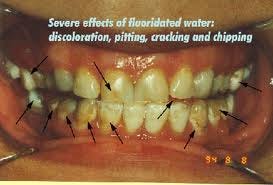
Above: Dental Fluorosis
In children’s teeth, fluoride causes dental fluorosis, a discoloration of the teeth found in large numbers in certain cities with water fluoridation.

Skeletal Fluorosis
TheNationalAcademy of Sciences (NAS) stated in 1977 thatfortheaverageindividual,a retentionoftwomilligrams per daywould resultincrippling skeletal fluorosisafterforty years.Considering theabove- mentioned intake level, it is likely that skeletal fluorosis already affects a significant portion ofthe population.
Pineal gland concentrations were measured of 330 parts per million. Thanks to the research by the University of Surrey in England in 1997, we know that more fluoride accumulates in the pineal gland than in any other soft tissue of the body. The pineal gland secretes the sleep hormone melatonin at night. Melatonin is not only responsible for proper sleep but also for the onset of puberty, and it is a free-radical fighter protecting your brain from oxidation. The lack of melatonin causes insomnia, which in turn can increase your risk for Alzheimer’s disease, depression, adrenal fatigue, obesity, and so much more. The New York Times published an article in 2006 about the record sales of prescription sleeping pills in the United States. One of the most frequent complaints in doctors’ offices is the inability to sleep. In 2009 it was reported that sales of prescription sleeping pills climbed 7 percent in one year, while sales of prescription antidepressants jumped 15 percent!
Fluoride accumulation in the pineal gland causes calcification and damages the cells responsible for making and secreting melatonin.
The researchers in Surrey examined the effect of fluoride on rats and found markedly reduced melatonin levels and early puberty onset in female rats.
Unfortunately, though bad enough, fluoride has far worse consequences than calcification of the pineal gland and fluorosis.
Fluoride lowers children’s IQ. This is no joke. Harvard University published a meta-analysis recently stating, among other things:
Findings from our meta-analyses of 27 studies published over 22 years suggest an inverse association between high fluoride exposure and children’s intelligence... The results suggest that fluoride may be a developmental neurotoxicant that affects brain development at exposures much below those that can cause toxicity in adults …
Serum-fluoride concentrations associated with high intakes from drinking-water may exceed 1 mg/L, or 50 Smol/L, thus more than 1000-times the levels of some other neurotoxicants that cause neurodevelopmental damage. Supporting the plausibility of our findings, rats exposed to 1 ppm (50 Smol/L) of water-fluoride for one year showed morphological alterations in the brain and increased levels of Aluminum in brain tissue compared with controls …
In conclusion, our results support the possibility of adverse effects of fluoride exposures on children’s neurodevelopment.
In short, children that live in areas with high Fluoride levels in drinking water have lower IQ’s because Fluoride is a neurotoxin. Fluoride reduces the receptors for the neurotransmitter Acetylcholine. This leads to Alzheimer’s disease and other forms of dementia. Fluoride leads to increased passage of Aluminum through the blood brain barrier. Aluminum is implicated in Alzheimer’s disease and dementia.
In 2005 Lita Lee, Ph.D. published the paper “Fluoride – A Modern Toxic Waste” stating:
“Yiamouyiannis’ book, ‘Fluoride, The Aging Factor,’ documents the cumulative effect of tissue damage by fluoride, commonly seen as aging (collagen damage), skin rashes and acne, gastrointestinal disorders, and many other conditions, including osteoporosis. The U.S. Center for Disease Control and the Safe Water Foundation reported that 30,000 to 50,000 excess deaths occur in the United States each year in areas in which the water contains only one ppm fluoride.
“… Fluoride suppresses the immune system: Fluoride inhibits the movement of white blood cells by 70%, thereby decreasing their ability to reach their target. Yiamouyiannis cites 15 references in his pamphlet, Lifesavers Guide to Fluoridation, that document immunosuppressive effects of as little as 10% of the amount of fluoride used in fluoridated water … Immunosuppressive effects run the gamut, from a cold that won’t go away to increased risk of cancer and other infectious diseases.”
Following is a list of health problems which studies showed were caused by Fluoride:
– Disrupted collagen synthesis
– Hyperactivity/Lethargy (could there be a link to the epidemic of ADD/ADHD?)
– Bone fractures
– Insomnia
– Depression
– Low thyroid function
– Bone cancer and other cancers
– Dementia, Alzheimer’s disease
– Inhibition of antibody formation, disturbance of white blood cells, aka low immune function
– Premature puberty in girls (more and more 8 year old girls reach puberty)
– Low sperm, infertility in men
Fluoride is found in black and green tea eight times higher than the amounts in tap water. These teas also contain aluminum, and it likes to combine with fluoride and settle in the brain tissues, most likely causing Alzheimer’s disease.
Fluoride-based pharmaceuticals were used to treat hyperthyroidism in the last century. This means fluoride suppresses thyroid function. Water fluoridation may be one reason why hypothyroidism is epidemic.
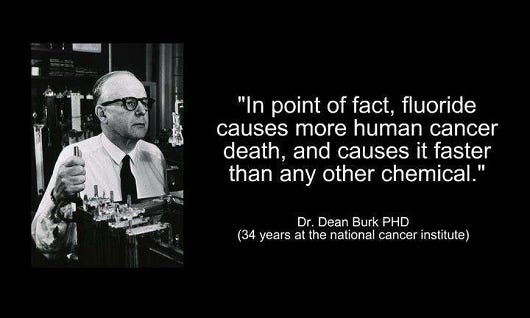
Dr. Dean Burke, who cofounded the US National Cancer Institute in 1937, equates the fluoridation of drinking water with public murder. He referred to a study comparing the cancer rate of ten cities with water fluoridation with ten cities without water fluoridation. The study found an abrupt increase in cancers two years after water fluoridation began.
A lot of this information was known in 1985 when the EPA decided to double the fluoride dose poured into city drinking water. The EPA’s Office of Drinking Water chief toxicologist, who also worked for the Surgeon General’s office, Dr. William Marcus, as well as many colleagues, researched the safety of water fluoridation and concluded that it was not safe at the proposed levels. The EPA overruled the scientists and fired Dr. Marcus for not backing down from his position.
Dr. Phyllis Mullenix, who once headed the Department of Toxicology at the Forsyth Dental Research Institute (FDRI) in Massachusetts, spoke out about the results of the Harvard study that she helped coordinate and was consequently fired for speaking out against fluoride. The EPA ignores the research of its own scientists that have proven the neurotoxic effects of fluoride. The EPA’s own established safe dose for fluoride is 0.000007 milligram per kilogram body weight. The average person in an area that does water fluoridation ingests about 0.01 milligram per kilogram of body weight. That is about 1,428 times the established safe dose!
Now you know the damage done by fluoride added to your drinking water. It is easy enough to avoid it in toothpaste, mouthwash, and dental floss: buy fluoride-free products that you usually won’t find in supermarkets. You can find them in health food stores and Whole Foods.
Taking fluoride out of your drinking water requires a special filter. Even a reverse osmosis filter, I’m told, will not remove fluoride. Cheaper filters such as Britta and simple carbon or ceramic filters certainly won’t remove it. A Hurley fluoride filter can be used in sequence, inserted between a particle filter and the faucet.
Just as important is to support local anti-fluoridation groups that seek to convince city councils to stop fluoridating the water supply.
Pharmaceuticals in Your Water
According to the US Geological Survey (USGS), the antibiotic sulfamethoxazole is found in streams and in groundwater. Waste water treatment plants and septic tanks are a major source. It was also found that such plants are a major source for antidepressant pharmaceuticals contaminating streams and the fish that live in them. The brains of such fish that live downstream of these plants contained traces of eight different antidepressant drugs. The streams examined were the Boulder Creek near Boulder, Colorado, and Fourmile Creek near Ankeny, Iowa. At least the fish were happy.
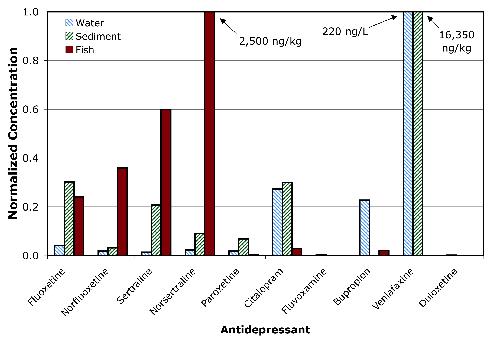
Antidepressants in water: Reprinted in part with permission from Schultz, M.M., Furlong, E.T., Kolpin, D.W., Werner, S.L., Schoenfuss, H.L., Barber, L.B., Blazer, V.S., Norris, D.O., and Vajda, A.M., Antidepressant pharmaceuticals in two U.S. effluent-impacted streams: occurrence and fate in water and sediment, and selective uptake in fish neural tissue. Copyright 2010 by Environmental Science and Technology, v. 44, no. 6, p. 1918–1925
In a 2004–2009 USGS study, it was found that the water near waste water plants that receive waste water from pharmaceutical manufacturing facilities contains 10 to 1,000 times the concentrations of the respective pharmaceuticals produced at the plant than the water near plants that don’t receive such waste water.
Pharmaceuticals end up in the water supply not only from waste water of the pharmaceutical industry but from humans taking pharmaceuticals and then excreting them and their metabolites into the toilet. It can seep into the groundwater from manure of animals treated with pharmaceuticals.
Not only antibiotics and antidepressants are found in streams and groundwater. More than 80 percent of waterways tested in America show some traces of common medicines, such as acetaminophen, hormones, blood pressure medications, codeine and antibiotics, according to the United States Geological Survey (USGS). Besides pharmaceuticals, personal care products such as fragrances, sun screen, body lotion, and cosmetics are found in the water as well.
The WHO found: “Concentrations in surface waters, groundwater and partially treated water were typically less than 0.1 µg/l (or 100 ng/l), whereas concentrations in treated water were generally below 0.05 µg/l (or 50 ng/l).”
They conclude that “Current observations suggest that it is very unlikely that exposure to very low levels of pharmaceuticals in drinking-water would result in appreciable adverse risks to human health, as concentrations of pharmaceuticals detected in drinking- water (typically in the nanogram per liter range) are several orders of magnitude (typically more, and often much more, than 1000-fold) lower than the minimum therapeutic dose.”
In early 2008, the Associated Press released a report detailing its investigation of pharmaceuticals found in the drinking water of fifty American cities. Philadelphia ranked highest on that list, with fifty-six pharmaceuticals and pharmaceutical by-products in its treated drinking water—including azithromycin, tetracycline, amoxicillin, and prednisone.
The WHO admits that there exist gaps in their knowledge. They don’t know what the long-term exposure to such pharmaceuticals will do, as well as the combination of so many different pharmaceuticals. Even the EPA, who finds fluoride, oh, so safe, admits that behavioral and sexual mutations have been found in fish exposed to traces of pharmaceuticals in the water. Male fish were found with eggs developed in their sexual organs. Frogs suffer from delayed metamorphosis, and fish have delayed sexual development.
The USGS (US Geological Survey) just developed new high- sensitive analytical methods for detecting trace amounts of pharmaceuticals. In a few years, maybe we will know the exact scope of the problem. Meanwhile, get a water filter.

Plastic in Your Water
Bisphenol A and phthalates (pronounced Ftalates) are the “Everywhere Chemicals” because they are everywhere wreaking havoc on our health.
Bisphenol A (BPA)

BPA was discovered in 1891 by a Russian chemist. A British chemist discovered its estrogen like properties in the 1930s. BPA was used to fatten up cattle and poultry and to replace lost estrogen in women. It is called a xenoestrogen, from the Greek word xeno, meaning foreign. It is an estrogen of foreign origin. Since the 1950s, it is used to harden polycarbonate plastics and to make epoxy resins. It is used in the lining of food and beverage containers.
Today, about eight billion pounds are produced yearly. It is used to make clear and hard plastic containers, such as baby bottles and water bottles, DVDs and CDs. It is also used in the lining of water pipes. BPA-based epoxy resins are used to make the lining of food and beverage cans. It is also found in thermal papers like sales receipts, dental fillings, sports equipment, and eyeglass lenses. The BPA in thermal paper is only weakly bound to the paper and easily rubs off on the skin. Thoroughly wash your hands after touching sales receipts. And wash them after touching money. Ninety-five percent of paper money was found to contain BPA.
Recycled sales receipts are then used to make toilet paper. Researchers in Dresden, Germany, stated that toilet paper contains 430 milligrams BPA per kilogram dry mass. When the toilet paper is flushed, the BPA ends up in the waste water plants, and then in the groundwater. From there it gets back into our tap water.
BPA leaches into the food and beverage it surrounds. Microwaving such containers and keeping plastic water bottles in a hot car makes it even worse.
BPA is even found in dust in your home where you inhale it.
Canada was the first country in 2010 to label it a toxic substance. In the European Union and the United States, it was banned for use in baby bottles. I can’t figure why it wasn’t banned for any use in food and beverage products. The other problem is that BPA-free-labeled products are not necessarily BPA-free. Manufacturers switched to bisphenol S and can thus label their product BPA-free as they don’t contain bisphenol A. Bisphenol S is just as damaging as bisphenol A. There are actually sixteen different bisphenols made from A to Z.
The National Resources Defense Council petitioned the FDA in 2008 to ban the use of BPA in food and beverage packaging. In 2012 the FDA denied their request, stating that further research was necessary. Really?
BPA not only disrupts the hormones of children, causing low testosterone in boys and premature puberty in girls, but it also causes breast cancer, male infertility, low testosterone (premature andropause), and prostate cancer in adult men.
A group of BPA opponents reviewed the available literature on BPA effects in line of a government-sponsored study and found: “BPA at concentrations found in the human body is associated with organizational changes in the prostate, breast, testis, mammary glands, body size, brain structure and chemistry, and behavior of laboratory animals.”
A review by the National Institute of Health found that xenoestrogens alter the brain structure, function, and behavior of rats. A 2008 Yale School of Medicine study on primates found that chronic exposure to BPA had adverse neurological effects. The study found a connection between BPA and interference of brain cell connections, affecting memory, learning, and mood.
In February 2013, researchers at Duke University, North Carolina, published their findings that show how BPA damages brain cells in unborn babies. Dr. Wolfgang Liedke, MD, PhD, and his team described the mechanism found:
During early development of neurons, high levels of chloride are present in the cells. These levels drop as neurons mature, thanks to a chloride transporter protein called KCC2, which churns chloride ions out of the cells. If the level of chloride within neurons remains elevated, it can damage neural circuits and compromise a developing nerve cell’s ability to migrate to its proper position in the brain.
Exposing neurons to minute amounts of BPA alters the chloride levels inside the cells by somehow shutting down the KCC2 gene, which makes the KCC2 protein, thereby delaying the removal of chloride from neurons.
They found that girls were much more affected than boys and suspect a link to Rett syndrome, which is a severe form of autism only found in girls.
Researchers at the North Carolina State University found that BPA exposure during early life led to structural changes in a part of the brain called amygdala, which led to increased anxiety in rats. They also found that when rats were fed soy, these changes didn’t occur. Problem is, 90 percent of soy found in the United States is GMO soy and must be avoided.
A 2008 review in mice found that BPA caused hyperactivity and attention deficits. Again, I refer to the skyrocketing numbers of ADD/ADHD. The reviews also found a disruption of thyroid function by BPA through the interference with thyroid receptors.
Besides causing breast cancer, prostate cancer, infertility, and attention deficit, BPA is also responsible for the onset of neuroblastoma (a form of brain cancer), andropause, and subsequently diabetes and heart disease. It is well-known (at least among holistic docs) that when men lose their testosterone and have an excess of estrogen, in addition to the estrogen-like BPA, they gain abdominal fat, grow male breasts, increase metabolic inflammation leading to reduced insulin sensitivity and diabetes, and ultimately develop heart disease, stroke, and cancer. Researchers studied 4,000 American adults and found that the higher their BPA urine levels, the higher their risk for acquiring diabetes.
Over 130 studies show a link between BPA and breast cancer. Despite this, the nonprofit Susan G. Komen for the Cure foundation denies this link. This organization is the largest organization supposedly dedicated to eradicating breast cancer. They have a funny way of showing it, though. In 2010 they teamed up with Kentucky Fried Chicken that sold buckets with the pink ribbon called the Bucket for the Cure. The foundation actually promoted buying these bucketsful of unhealthy food to fund research. I’m sure the buckets are coated with a BPA plastic.
BPA is also linked with obesity in children and adults. The Journal of the American Medical Association, JAMA, published the findings in the September 2012 issue.
They examined 2,838 children between the ages of six and nineteen, and found that obese children had much higher levels of BPA in their urine than normal weight children. This was true for white children but not for blacks and Hispanics. Another study found the same correlation in adults. The BPA urine levels also correlated with developing diabetes and coronary artery disease later in life. It was found that the body stored BPA in the fat tissue. As I wrote earlier, our fat tissue is the garbage can for the body. When it is full of such garbage as BPA, the body will do everything possible to hang on to its fat tissue in order to not release the garbage back into the system. It’s an explanation to why it is so hard to lose fat these days.
A mother I met at a convention told me that her fourteen-year- old son started taking plastic water bottles to school about a year ago. Then he started to gain weight and develop a girl-type figure with gynecomastia (men breasts). I’m sure that if I were to test his testosterone level, it would be too low for his age.
I know of several young men with testosterone levels that are lower than those of a ninety-year-old man. There were no obvious reasons found for their low hormone levels, and I suspect they were caused by the hormone disruptors BPA and phthalates.
The Canadians statistics office did a survey in 2010 and found that 91 percent of all Canadians were excreting BPA in their urine. The average level found was one part per million—about 1,000 times higher than estrogen circulating in the body. Canadian teens had about 30 percent more BPA than adults.
To summarize: BPA is linked to autism, ADD/ADHD, breast cancer and other cancers, premature puberty in girls, feminization of boys, obesity, diabetes, atherosclerosis, heart attack, and stroke. And all of us have BPA stored in our fat tissue.
Phthalates
The first plasticizer used was castor oil in 1856. In 1870 camphor surpassed castor oil until the first phthalates were introduced in the 1920s. It quickly replaced camphor that was smelly and very volatile. PVC and one of the phthalates revolutionized the plastic industry in 1931. There are at least twenty-five varieties of phthalates in use.
Phthalates are plasticizers added to plastic to make it flexible, transparent, and durable. They are used in lubricants, binders, emulsifying agents, dispersants used to make end products such as enteric-coated drugs, glue, electronics, building materials, personal care products, food products, pesticides, paints, toys, modeling clay, packaging, textiles, shower curtains, sex toys, vinyl upholstery, floor tiles, cleaning materials, perfume, eye shadow, moisturizers, nail polish, dish soap, hair spray, and more. Phthalates are the dominant plasticizer in PVC.
They are not solidly bound to the plastics they’re mixed in and thus get released into the environment very easily. The CDC tested individuals and found metabolites of multiple phthalates in the urine of most of them. They are taken in through diet and the environment. Dietary intake accounts for most of it. It is very prevalent in fatty foods like butter, milk, and meat.
Worldwide about six million tons are consumed yearly, whereas Europe only accounts for one million pounds. I suspect that most of it is consumed in the United States.
Outside, phthalates degrade quite well, and they therefore don’t persist in the environment forever. Concentration of phthalates is higher in air tested indoors. They are quite volatile and their use in PVC flooring, tiles, toys, and all the other products mentioned above cause them to evaporate into the air indoors. Higher temperatures increase their evaporation. A Swedish study found that children absorb phthalates from PVC flooring by breathing it in and absorbing it through the skin. So we not only have to avoid food in plastic packaging, but we have to avoid using plastics in our home, too. The CDC found that many children have an intake of phthalates that is twentyfold of tolerable levels.
In Bulgaria, a study found higher levels of phthalates in homes of children suffering from asthma and allergies. Infants and children have a higher intake of phthalates. It is attributed to the use of baby shampoos, powder, and lotions that cause higher urine levels of phthalates in such infants. Also, their behavior of taking everything in their mouth as their natural way to explore things exposes them to phthalates. Every baby I ever met took toys, pens, and whatever they had in their hands into their mouth. A Danish study found phthalates in erasers that children frequently bite on.
A Czech study in 2009 fed broiler chickens different kinds of feed with various levels of phthalates. They found that the phthalates accumulated mainly in the fat tissue; however, they were also detected in the muscles, skin, and liver. The control chicks had to be fed fat less commercial feed. The other groups received either rapeseed oil stored in a plastic container (which produced high phthalate levels) or in metal tanks (lower phthalate levels) or animal fat. The researchers found high phthalate levels in raw materials used to make chicken feed.
They found over 4.06 milligrams per kilogram in wheat and 4.37 milligrams per kilogram in corn. Seventy percent of animal farm feed is made up of these grains and pose a significant risk not only to farm animals but also to us humans at the end of the food chain.
Children in hospitals are even more exposed to phthalates, as many medical devices contain high amounts of phthalates. IV tubes, nasogastric tubes, IV bags, gloves, and respiratory tubing contain up to 40 percent of phthalates by weight. The FDA found that prematurely born babies had a fivefold level of exposure than the allowable daily intake.
Certain medications contain high levels of phthalates. Among them are omeprazole, meselamine, theophylline, and didanosine. Exposure from such medication far exceeds the exposure of the population not taking these drugs.
According to observations done in 1994 and in 2010, there is a connection between phthalate exposure and hormonal disruption that leads to breast cancer. A study done in Mexico in 2010 found that certain phthalates were associated with an increased risk for breast cancer.
Phthalates are antiandrogenic. This means that they interfere with the male hormone production of testosterone. A paper by Dr. Shanna Swan published in the International Journal of Andrology in November 2009 found that boys exposed to phthalates during their mothers’ pregnancy showed less male typical play behavior. They avoided toys like cars, trains, or toy guns and rough play. They preferred playing with feminine toys. Think of a boy playing with a Barbie doll. It’s not only suspected that phthalates interfere with the male sex hormone testosterone, but that they also actually alter the brain structure.
The pharmaceutical industry is pushing antidepressant drugs on pregnant women to “prevent” postpartum depression. Many antidepressant drugs contain fifty times the “safe” phthalate levels. This madness produces an entire generation of feminized boys with low sperm count, infertility (already happening), and feminine body types. It raises the question of whether phthalates also influence sexual preference and have anything to do with male homosexuality.
The Danish Environmental Protection Agency brought out a report in 2009 stating that children are exposed to a vast array of “gender-bending” environmental pollutants that are feminizing young boys. They are a cause of increasingly low sperm counts and infertility in the Western world.
Phthalates are also linked to obesity. A study of the urine levels of phthalates in men showed a correlation between the levels found and the rate of obesity and diabetes. When one understands the connection between low testosterone and obesity with diabetes, this is no surprise.
A 2011 study of children in New York found a correlation between high urine levels of phthalates and obesity. Obesity was associated with higher phthalate levels. Another study in 2012 found urine phthalate levels to be correlated with a twofold risk for diabetes. It may explain the obesity and diabetes epidemic in children.
Phthalates are also metabolic disruptors. Long-term exposure leads to deregulated metabolic pathways for carbohydrates and fat. It was found that they also interfere with insulin metabolism.
Women with high phthalate levels in their urine have a threefold risk to deliver a premature baby. Babies with prenatal exposure to phthalates were more often born with low birth weight. Low birth weight is a leading cause of child death up to the age of five years and a risk factor for developing cardiovascular and metabolic disease later in life.
Studies in Korea and by the Mount Sinai Children’s Environmental Health Group found that children with higher prenatal phthalate exposure had an increased risk of behavioral, mental, and motor problems during their preschool years.
A Chinese study found that phthalates interfere with thyroid hormone receptors and are responsible for slow thyroid function. Phthalate prevents the hormone T3 from connecting with its receptors, thus preventing its function.
In 2008 a new law was passed in the United States limiting the use of certain phthalates in children’s toys and child-care articles.
How to avoid phthalates:
Read the ingredients. According to the organization Pollution in People, you can identify phthalates in some products by their chemical names or abbreviations:
· DBP (di-n-butyl phthalate) and DEP (diethyl phthalate) are often found in personal care products, including nail polishes, deodorants, perfumes and cologne, aftershave lotions, shampoos, hair gels, and hand lotions. (BzBP, see below, is also in some personal care products.)
· DEHP (di-2-ethylhexyl phthalate or Bis(2-ethylhexyl) phthalate) is used in PVC plastics, including some medical devices.
· BzBP (benzylbutyl phthalate) is used in some flooring, car products, and personal care products.
· DMP (dimethyl phthalate) is used in insect repellent and some plastics (as well as rocket propellant).
Be wary of the term “fragrance,” which is used to denote a combination of compounds, possibly including phthalates. We will look at the problem of fragrances in the next chapter.
Choose plastics with the recycling code 1, 2, or 5. Recycling codes 3 and 7 are more likely to contain bisphenol A or phthalates.
Install a good water filter. Avoid PVC windows and doors; choose wood. Avoid vinyl shower curtains, PVC toys, and vinyl plastic wrap. Use glass or ceramic containers to store food, with polyethylene wrap as cover.
If you’re a guy trying to make a baby, throw out the cologne and hair gel, switch to natural deodorants, don’t light up scented candles, throw out the Christmas tree air freshener hanging on your rearview mirror, don’t heat up your plastic- wrap-covered food in the microwave, and don’t drink out of plastic bottles.